

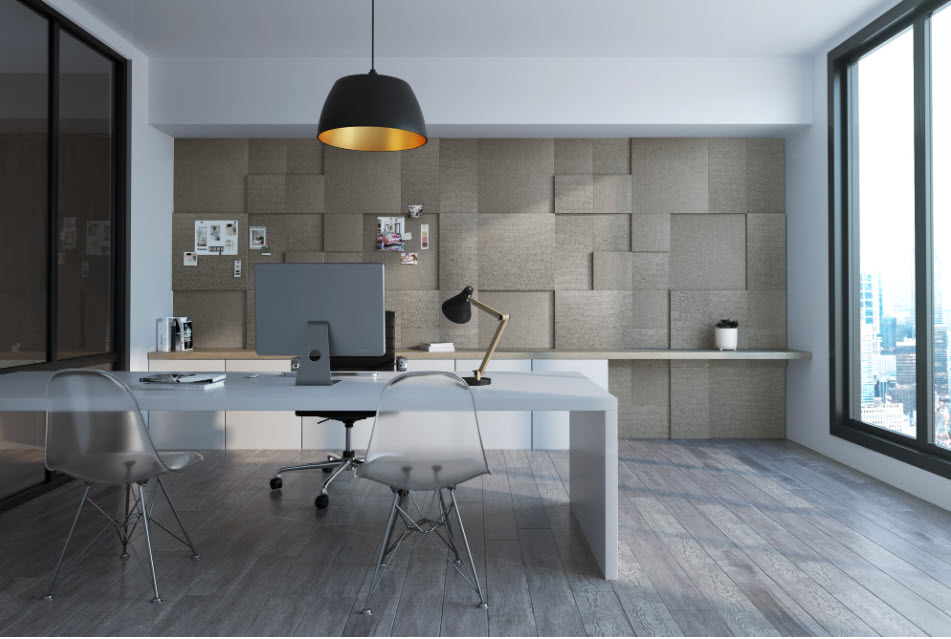
When most people think about choosing wallpaper for a commercial project — whether it’s a boutique hotel, corporate office, medical facility, restaurant, or upscale retail space — aesthetics, durability, and cleanability usually top the list. Very few decision-makers immediately consider acoustics. Yet sound control is one of the most overlooked factors affecting guest satisfaction, employee productivity, patient recovery rates, and overall occupant comfort.
This is where commercial acoustical wallpaper (also called sound-absorbing or noise-reducing wallcovering) shines. While it won’t turn a busy lobby into a recording studio, high-performance acoustical wallpaper can dramatically lower perceived noise levels, reduce echo and reverberation, and create calmer, more refined environments — all while looking indistinguishable from traditional Type II vinyl wallcovering.
Modern commercial spaces face constant noise challenges:
In each of these scenarios, acoustical wallpaper delivers measurable noise reduction without requiring expensive structural changes or bulky acoustic panels that disrupt design vision.
Unlike standard commercial vinyl wallpaper, acoustical versions are engineered with multiple functional layers:
When sound waves hit a normal hard wall, up to 97–99% of the energy reflects back into the room, creating echo and amplifying noise. The soft, porous acoustic substrate in sound-reducing wallpaper absorbs a significant portion of that energy, converting it into tiny amounts of heat instead of bouncing it back.
Independent lab testing (ASTM C423 & ISO 354) shows many commercial acoustical wallcoverings achieve Noise Reduction Coefficients (NRC) of 0.15–0.35 on their own. When installed over 5/8" drywall with an air gap or lightweight insulation, the complete wall assembly can reach NRC ratings of 0.70 or higher — rivaling mid-tier acoustic ceiling tiles.
Because today’s acoustical wallcoverings are built on the same 54" wide, 20-oz or 21-oz Type II vinyl platform that designers already specify, they meet or exceed commercial durability standards:
This means you can confidently specify them in:
Even kitchens, laundry rooms, and restrooms in commercial settings can benefit from the softer sound of clattering dishes, running appliances, or echoing footsteps.
One of the biggest myths is that acoustical wallpaper is harder to install. In reality, most commercial-grade products hang exactly like standard Type II vinyl:
The slightly thicker profile (usually 0.040"–0.060" total thickness) actually makes booking and positioning easier and helps hide minor wall imperfections.
Gone are the days when acoustical wallpaper meant boring beige fabric. Today’s collections include:
Acoustical wallpaper isn’t just a functional upgrade — it’s a design opportunity that delivers measurable returns in occupant comfort, higher reviews, improved productivity, and even energy savings (calmer spaces often need less aggressive HVAC white-noise masking).
If you’re working on a hotel renovation, office fit-out, medical office build-out, healthcare expansion, or multifamily development, let’s explore how commercial-grade sound-reducing wallcovering can elevate both the experience and the acoustics of your space.
Contact us today for samples, acoustic test reports, and project-specific recommendations. We’ll help you select the perfect combination of beauty, durability, and peace-and-quiet your clients will notice — even if they can’t quite put their finger on why the room suddenly feels so much better.
Because sometimes the most powerful design choices are the ones you can feel… but barely hear.